
George IV’s Brighton

Brighton Pavilion (2011)
A forty-year love affair
George IV first visited Brighton in 1783 as the young and charming Prince of Wales. Attracted by the freedom that the town gave him, away from the repressive austerity of the court of his father, George III, the prince made Brighton his second home for nearly forty years. Despite growing unpopularity during his Regency and subsequent reign, the town remained loyal to the monarch who had helped bring it into fashion.

Brighton from A Guide to all the Watering and Sea-Bathing Places (1815)
Early visits
George first began visiting Brighton in the company of his disreputable uncle, the Duke of Cumberland. By the 1780s, the simple fishing village of Brighthelmstone was growing into a fashionable seaside resort. Brighton could offer the elegant entertainments of ballrooms, card rooms and libraries alongside the natural benefits of Dr Russell’s famous cure – both bathing in, and even drinking, sea-water. George himself came in 1784 to take this sea-water treatment for a bout of ill health.
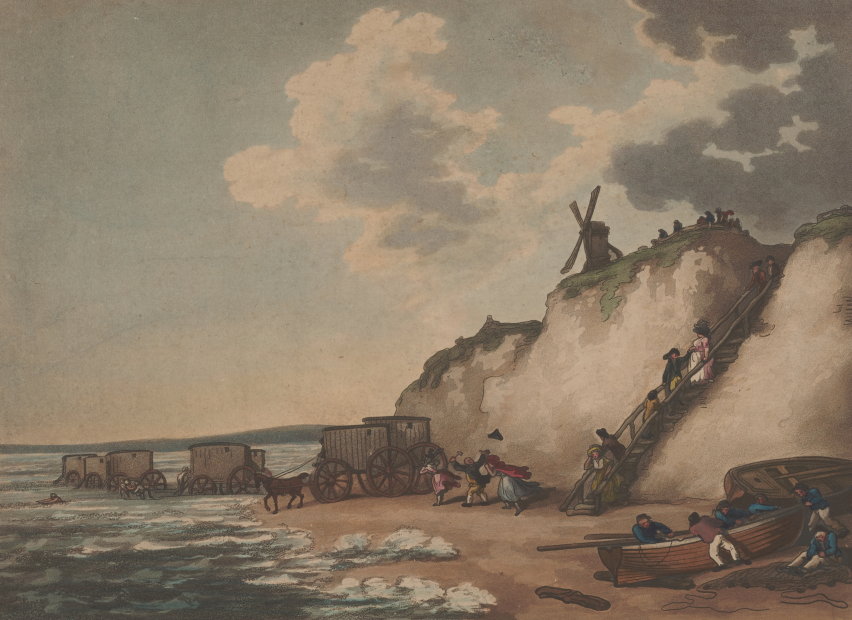
Bathing machines in Brighton by T Rowlandson (1790)
The Brighton Pavilion
George determined to form a permanent establishment in Brighton. From 1786, he rented Brighton House from his chef, Louis Weltje, which was then developed by Henry Holland into the Marine Pavilion. Finally taken on a lease of the property in 1793, George continued to develop it, transforming the interiors with oriental designs in the 1800s through the skills of the firm of Crace.
A magnificent new stable block was added in 1803, designed by William Porden.
In 1815, the prince employed John Nash to extend the main pavilion using Indian influences. Nash added the banqueting and music rooms, and transformed the silhouette of the pavilion with a cacophony of minarets and bulbous, onion-shaped domes.
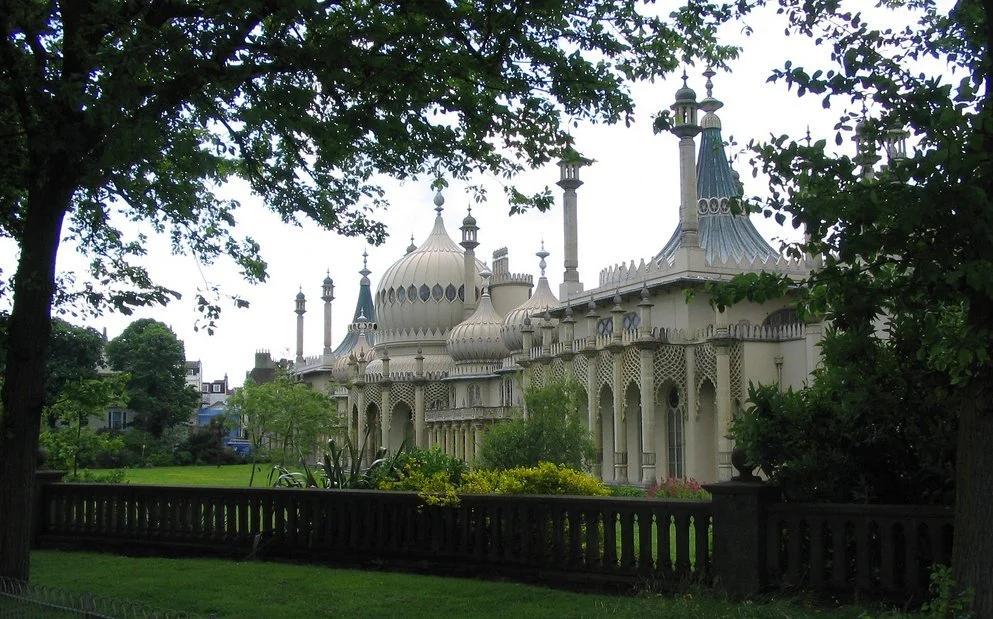
Brighton Pavilion from the Steyne (2011)
The Prince of Wales and Mrs Fitzherbert
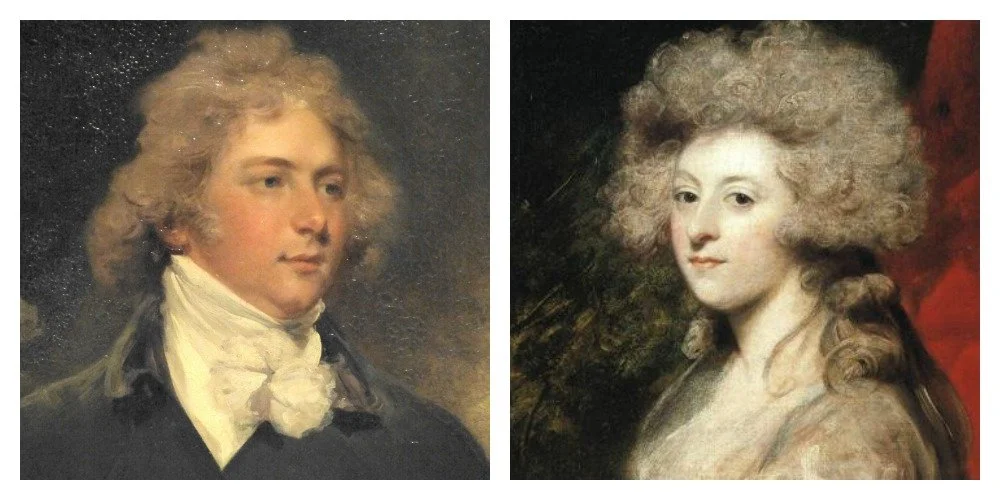
George IV when he was Prince of Wales by Hoppner (1792)(flipped) and Maria Fitzherbert by Sir Joshua Reynolds (1788)
Brighton provided a safe haven for the prince and his secret wife, Mrs Fitzherbert, away from the critical eyes of the London ton and, more importantly, the disapproval of George III, who was vehemently opposed to the relationship.
Mrs Fitzherbert did not live at the pavilion, but had her own house on the Steyne. According to a contemporary guidebook:
This elegant modern mansion was built after a plan of Mr Porden, having a handsome brick-front toward the Steyne, with a colonnade finished in the Egyptian stile (the Egyptian front was blown down during the winter of 1805.), a double staircase, and a beautiful painted window; leading to an elegant suite of rooms, fitted up with much taste. 1
The modest residence boasted a long veranda which overlooked the Steyne.

Mrs Fitzherbert's house on the Steine (2018)
The last years
During the last years of his life, George IV was grossly overweight and suffered from perpetual ill health. He grew reluctant to be seen in public and by 1827, he was virtually a recluse. Brighton had become much too public for his taste and he required the privacy that the Royal Lodge, in the middle of Windsor Great Park, could offer him.
His last visit to Brighton was in 1827. He left on 7 March 1827 never to return.
Rachel Knowles writes faith-based Regency romance and historical non-fiction. She has been sharing her research on this blog since 2011. Rachel lives in the beautiful Georgian seaside town of Weymouth, Dorset, on the south coast of England, with her husband, Andrew, who co-writes this blog.
If you have enjoyed this blog and want to encourage us and help us to keep making our research freely available, please buy us a virtual cup of coffee by clicking the button below.
Note
Feltham, John, A Guide to all the Watering and Sea-Bathing Places (1815).
Sources used include:
Feltham, John, A Guide to all the Watering and Sea-Bathing Places (1815)
Fry, Plantagenet Somerset, The Kings & Queens of England & Scotland (1990)
Morley, John, The Royal Pavilion, Brighton
Parissien, Steven, George IV, The Grand Entertainment (2001)